
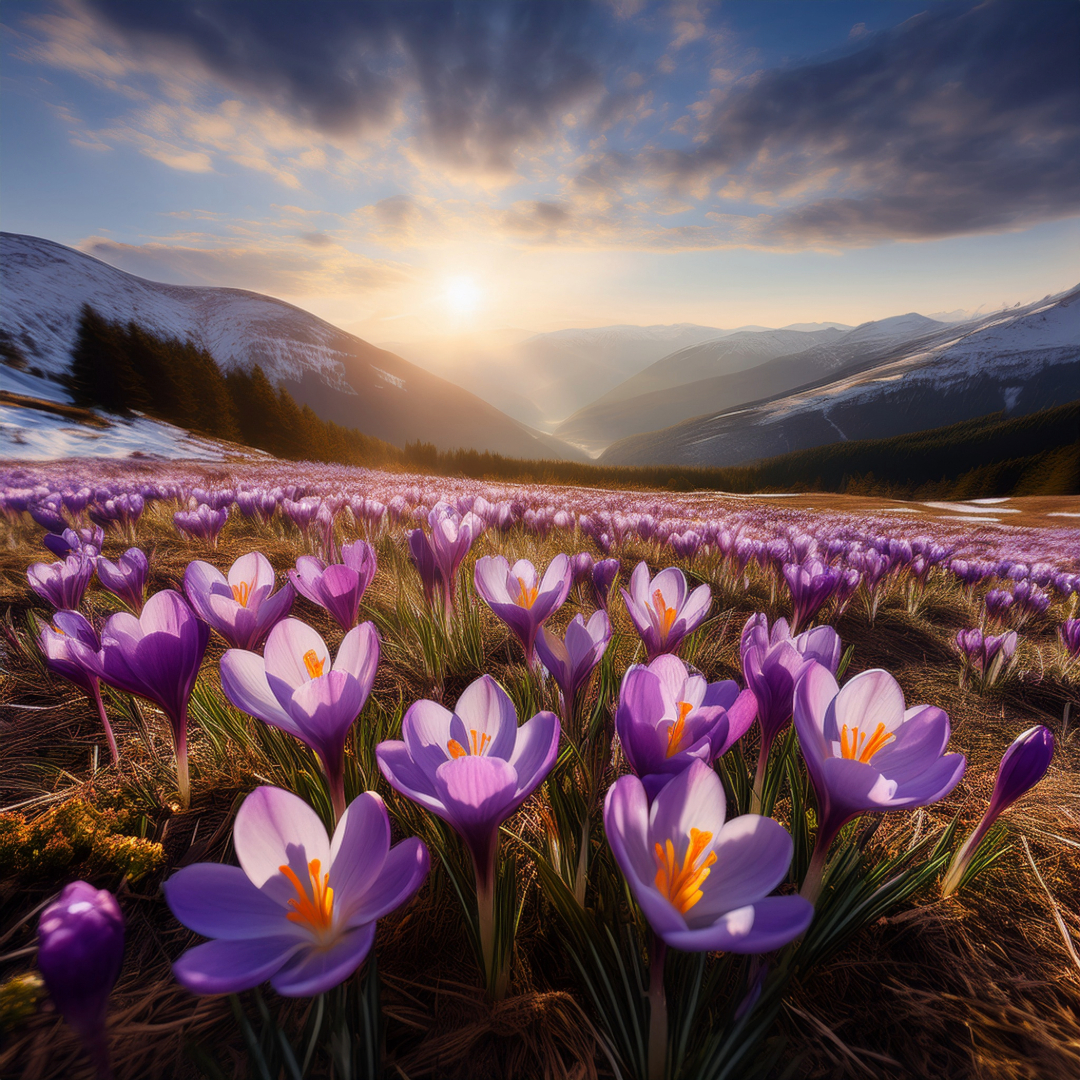
Just like picking the flowers, this is a labour-intensive project. Saffron [...]
Ambergris is a rare perfume ingredient.
It is already 6 years ago that a huge piece washed up on Texel (83 kg of a dead sperm whale.) The animal undoubtedly suffered from a blockage.

Many people think that ambergris bile is what spits out the sperm whale. However, this does not appear to be true. Amber originates in the intestines of the sperm whale, around undigested bits of cuttlefish that he eats. This does not happen with all sperm whales. Most sperm whales regularly spit out the indigestible pieces of deep sea squid. It is estimated that there are between 500,000 and 2 million sperm whales worldwide, with only 1 in 100 having a deviation. A leak between the stomachs causes the pieces of squid to end up in the gut and is embedded in a mixture of amber and half-digested back shells of the octopuses. A deep sea dive ensures that it is pressed into amber, a lump just as hard as wood. After a period of time the sperm whale pours out the pressed amber and these chunks can be found on the beach. The pieces often float at sea for a long time.
There are of course different shapes, colors and stages, of ambergris. Some pieces are black and still reasonably soft, they have an unpleasant smell! The smell is described as animal, musky, earthy. Depending on how long ambergris has been in the ocean, the smell can vary considerably. Here, too, it differs per person how the smell is received. The older pieces are more dry, harder and are gray / brown, in all kinds of gradations.
One of the properties of ambergris is to bind scents, which is often in the base of a perfume. A scent with a pinch of ambergris in it stays much longer than a scent without amber. Ambergris is therefore still used in the perfume industry and is worth a lot of money. For example, the block that comes from the sperm whale of Texel is estimated at a few tons.
Ambergris should not be confused with Amber (amber).
As a vegetable alternative, the fragrance Labdanum can be used, the resin of the cistus rose also corresponds to the fragrance aspect. Just like Ambrette seed and angelica (Angelica) are used as an alternative to the Ambergris.
Are you going to look for ambergris during your beach holiday?

PROFUMI DEL FORTE – Ambra
Created in 2009 by perfumer Arturetto, in which amber gray is combined with Orange, Jasmine, Ylang-Ylang and White musk.

TIZIANA TERENZI – Dionisio
Oriental Vanilla fragrance for both men and women. Where ambergris is combined with Musk, Jasmine, Agarwood and Madagascar Vanilla.
The name cinnamon comes from Latin, "canella", "stick".
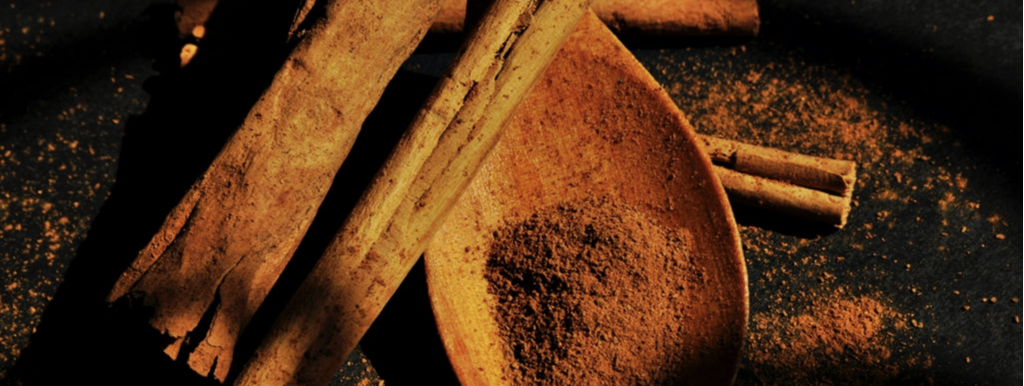
(Ceylon) Cinnamon (or Cinnamomum verum) is one of the best-known spices that comes from the inner bark of the shoots of the cinnamon tree. There are several species, an important species is Cassia (or Cinnamomum aromaticum). Cassia is somewhat stronger and sweeter than Ceylon cinnamon. Cinnamon is one of the spices that can be used for both sweet and savory dishes.
In addition to that cinnamon one of the best-known spices, it is also one of the oldest. Around 2800 BC cinnamon is mentioned in the herbal book of the Chinese Emperor Shennung. In Chinese medicine, cinnamon is used for its antibacterial properties and has therefore been prescribed for centuries for diseases such as colds, nausea and diarrhea. Cinnamon was also known in ancient Egypt and used in perfume.
It was so highly appreciated that cinnamon could even be a worthy gift for kings and other highs. Cinnamon is mentioned in Exodus 30: 23-25. Moses is commanded to use both sweet cinnamon and cassia for the anointing oil of the tabernacle: “Take the finest spices: five hundred shekels of viscous myrrh, half as much fragrant cinnamon – two hundred and fifty shekels, – two hundred and fifty shekels of fragrant sweetness and five hundred shekel cassia, all according to the sanctuary weight of the sanctuary, and a hin of olive oil, and prepared from it sacred anointing oil, a fragrant mixture like a perfume maker. With this holy anointing oil you have to anoint the meeting tent, the ark with the covenant, the table and the lampstand with all its objects, the altar of incense, the altar of burnt offering with the utensils and the washing basin and its foundation. “(Exodus 30: 23-28 NBV)
From 1580, the Portuguese had dominion over Ceylon (later Sri Lanka) and with it the monopoly on the cinnamon trade. At that time they traded an estimated 125 tons of cinnamon per year. The king of Kandy then called in the help of the Dutch. With this the cinnamon monopoly passed into Dutch hands. In 1765 Ceylon started to grow cinnamon on plantations for the first time. In 1796 the English conquered the island. The monopoly on the cinnamon trade came from that moment into English hands, until the Dutch succeeded in Indonesia to also plant cinnamon plantations there. Since then, Indonesia has exported about 8,000 tons of cinnamon per year.
Long before the Europeans took cinnamon from the Far East, they were familiar with this spice and also with cloves and nutmeg. Cinnamon was brought in via the Middle East and via the Hanseatic merchants. The familiarity with these spices in dry form is evident from the Hours of Philip of Cleves from about 1480
CINNAMON in PARFUMS
The bark is scraped into small pieces and laid to dry for 24 hours. The smell is removed from the (cinnamon) sticks by steam distillation. This perfume oil is most commonly used for perfumes and food.
You can actually use everything from the cinnamon tree to the smell. The oil of the leaves is obtained by steam distillation after drying. This oil is cheaper than the oil from the bark. It is used in the perfumery but you can find it more in soap and food. The kernels of the fruits contain cinnamon wax used in scented candles.
How does it smell?
Cinnamon sticks smell warm, full, slightly fruity, peppery and vanilla-like. The cinnamon leaves smell spicy, woody and a bit metallic.
A small selection of perfumes where cinnamon is one of the nuts.
1 million – Paco Rabanne
Poison – Dior
Amouage Lyric Woman – Amouage
La danza delle libellule – Nobile 1942
White Hinoki – Amouroud
Pompeii – Anima Mundi
Caldo Gourmand – Officina delle Essenze
Palindrome II – Santi Burgas (cinnamon tree leaves)
Used in tea, for cooking, as medicine and in perfumes …
What many people don’t know is that ginger is more than a root, ginger is a rhizome. I hear you think what is the difference? The rhizome is considered an underground stem, which means that there are leaves and buds on it. The rhizome is usually also a storage place, while the roots are only an anchor for the plant in the soil.
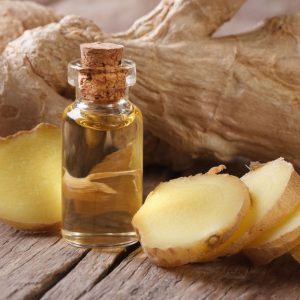
Originally ginger, or Zingiberene Officinalis, grew in Asia and was one of the first spices to arrive in Europe. Ginger belongs to the same plant family as turmeric and cardamom. In folk medicine ginger was used because of its ability to relieve inflammation, fever, colds, respiratory discomfort, nausea, menstrual complaints, upset stomach, arthritis and rheumatism.
Nowadays ginger (mainly) comes from China, from tropical Asia and Jamaica. Ginger distillation produces a peppery, resinous and spicy note that is used in many male perfumes because of its freshness or color so that it matches the citrus notes. The use of this oil is limited because of the citral, a known allergen molecule.
Another extraction technique that can be used is the ‘extraction with volatile solvents’. This method produces better and more interesting oils because the odor contains fewer terpenic notes. However, this method is a lot more expensive. Extraction with volatile solvents consists of dissolving the part of the plant in a solvent which is then evaporated. Developed in the 18th century, we use suitable solvents such as hexane and ethanol. The fragrant result is called a concrete or resinous substance.
Steam distillation is a technique in which water steam is used to feed the fragrant molecules of raw materials through a condenser, the result is an oil.
Did you know?!
..the name of ginger comes from the sanskrit shringavera, which means “look like the antlers of the stag”
..ginger oil also has the nickname ‘The oil of empowerment’
.. helps against hair loss
What’s going on in the Beauty world? One of the largest clothing webshops will focus on niche cosmetic brands. In doing so, they take serious steps to deal with this equally. At the beginning of this year, Zalando already included cosmetics in the range, but this has now been extended with a physical store.
The building has a retail area of 160 square meters and is located in the popular Berlin district of Mitte. Not enough room for the 5,000 products (of 150 cosmetics brands) that they offer online. That is why the physical store is a collaboration with Estee Lauder as a launch partner. In this ‘lab environment’ Zalando wants to offer consumers a tangible product experience. The store will be used for product launches, tutorials and advice from beauticians, among other things.
According to the press release issued by Zalando about the store opening, the physical store contributes to raising the customer experience to a ‘higher level’. “This is a big step for Zalando and its new beauty category. With our partner brands (Estée Lauder brands, M.A.C Cosmetics, Estée Lauder, Clinique and Origins ed.), We can further improve our beauty range, “says Claudia Reth, Vice President Specialties (Premium, Beauty, Kids). That the Estee Lauder group cooperates as a partner is not so surprising with the omni-channel strategy that the group uses. Eric Daugan, Vice President of Digital Commerce & Marketing EMEA at Estée Lauder, said in the same press release, “Consumer expectations and store behavior are constantly evolving.” Our omnichannel strategy is aimed at reaching millennium users wherever and whenever they want to, so we are proud to be together. to work with Zalando, Europe’s leading online platform for fashion and lifestyle, to expand its prestigious beauty category to reach more consumers. “
To see with your own eyes what this new player in the field has brought in, we traveled to Berlin.
In the bustling city of Mitte we indeed found the Zalando Beauty Store, indicated with a small sign on the building. Despite the fact that it is 160 square meters big, the store did not feel extremely large, the store was divided into two by 3 handy cabinets with shelves and mirrors. Upon entering you walked directly against the lipstick presentation of MAC cosmetics, followed by a clean white shop. Due to the recent opening you would expect that it would be fairly busy on a Friday afternoon (with possibly curious blogger / trendsetters), but the opposite was true and there was more staff than customers. The friendly staff pointed out that we could try everything. Trying and testing the products is therefore the main goal of the store. If you ask us you will need something more to lift the customer experience to a higher level than just ’trying’ (especially for the millennials). With all the (digital) possibilities that exist today … and knowing that ASWatson in Hong Kong recently entered into a partnership with L’Oreal where the consumer can also test the products through VR technology.
What we found interesting.
Volkswagen Conceptstore Berlin
Sometimes it is also good to look outside your own industry. Because last weekend the Volkswagen group opened their new concept store in Berlin. It was clear that this was not about selling directly, but about the experience. In one part of the building a bar was placed where you could sit quietly while you did not see a physical Volkswagen. Only a great Urban artwork on the wall where Volkswagen was incorporated. Here stood staff who let you know about the new technologies that Volkswagen recently offered. Think of WePark (a kind of Parkmobile) and WeDeliver, a collaboration with DHL where your package is delivered in the car. The second part of the building felt like a (science) museum, where on one side all pictures were hanging on the wall, which were also for sale there. Through VR technology you could drive the latest Volkswagen and experience the latest electric scooter through a game.

The name vetiver probably rings a bell. This raw material, was broadly used in some very famous perfumes of the last decades : Vetiver – Guerlain (1959), Vetiver 46 – Le Labo (2006), Terre – Hermes (2007), Sycomore – Chanel (2008).
Time to give some more explanation on this beautiful scented plant. The vetiver, ( or Vetiveria Zizanoide for the botanist/ latin speakers) is a herb which grows up to 1,50 meter high, with a very interesting root-system.
Especially for perfumes.
By doing a steam distillation of the dried roots, you will obtain a deep, lightly smoky, heavy, nutty, a little bit sweet, earthy, woody… base note. You probably understood how rich the vetiver smell is. When analysing the oil, you will find that the vetiver has quite a complex chemical identity. It also explains why the vetiver is often considered as a perfume itself.
Molecules such as vetiverol, acetate de vetiveryl, and some sesquiterpenes can be found in the oil.
Even with such a complex composition, the good news is that this raw material is NOT limited by any type of restriction ( IFRA, allergens … ). We will therefore be able to enjoy this elaborate scent for quite a while.
This tropical grass was originally from India and Sri Lanka, and is nowadays found in various tropical countries.
There are 3 types of vetiver used for perfumes:
– Vetiver Bourbon : coming from La Reunion it is the best and the most expensive. It is also generally the richest in Vetiveryl Acetate.
– Vetiver Haiti : well balanced, with round and smoky notes
– Vetiver Java : less expensive, the most smoky and harder to use
If you suddenly feel the urge to extract and smell the vetiver, you will probably need 1000 kgs of dried roots to get more or less 10 to 15 kg of the essential oil.
One more fact : The roots are also now cultivated in many tropical countries for household purposes and as an effective strategy to prevent soil erosion.
