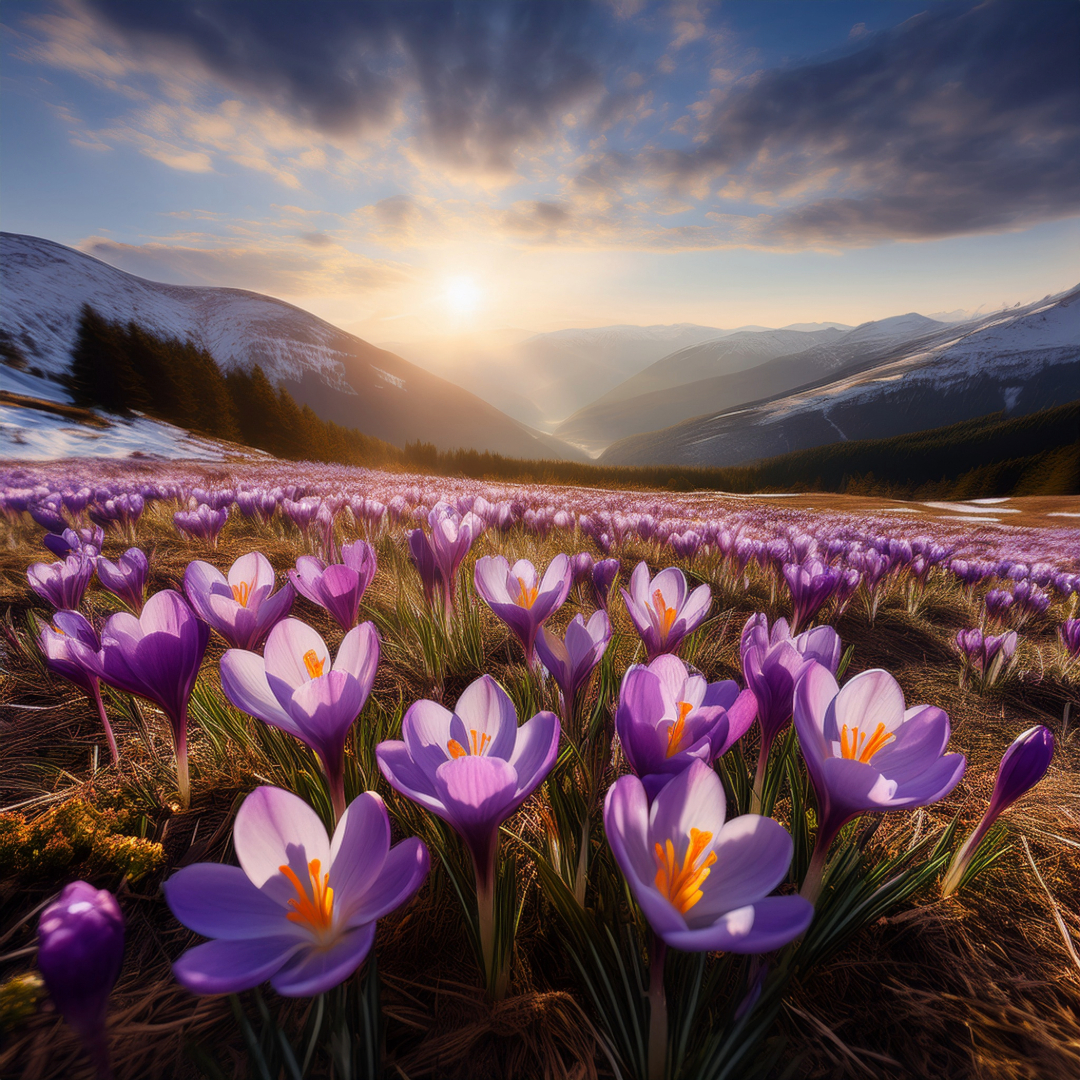
SAFFRON
Just like picking the flowers, this is a labour-intensive project. Saffron is one of the most expensive ingredients.
They only bloom in mid-fall. Harvesting is necessarily a quick affair: after flowering in the early morning, the flowers wilt quickly as the day passes. All plants bloom in a period of one or two weeks. Roughly 150 flowers together yield only 1 g of dry saffron; to produce 12 g of dried (or 72 g of moist and freshly harvested) saffron 1 kg of flowers is needed; 0.45 kg yields 5.7 g of dried saffron. A freshly picked flower yields an average of 30 mg of fresh saffron or 7 mg of dried saffron.
(source saffron.nl)
HISTORY
Ancient perfumers in Egypt, doctors in Gaza, city dwellers in Rhodes and the Greek courtesans used saffron in their fragrant waters, perfumes and potpourri, mascaras and ointments, sacrifices for the gods and medical treatments.
The documented history of saffron cultivation spans more than three millennia. The wild forerunner of the domesticated saffron crocus was Crocus cartwrightianus. Human cultivators cultivated wild specimens by selecting unusually long stamens; thus, a sterile mutant form of C. cartwrightianus, C. sativus, probably originated in late Bronze Age Crete.
Ancient Persians cultivated Persian saffron (Crocus sativus) in Derbena, Isfahan and Khorasan around the 10th century BC. In these places saffron threads were woven into textiles and ritually offered to gods and used in dyes, perfumes, medicines and to wash the body. Thus, saffron threads would be spread over beds and mixed with hot tea as a curative for attacks of melancholy. Non-Persians also feared the Persian use of saffron as a drying agent and aphrodisiac. In late Hellenistic Egypt Cleopatra used saffron in her baths so that making love would be even more pleasant. Egyptian healers used saffron as a treatment for all varieties of gastrointestinal diseases.
Related Posts





Latest Collection

Recent Works